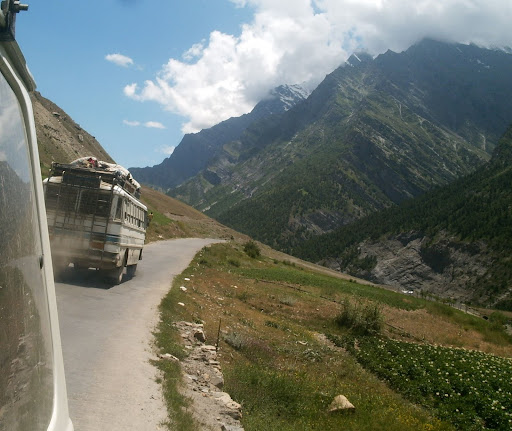
Leave early, blast past Rohtang into the deep Himalayas with just a brief stop for breakfast, and don't stop till we reach Khoksar. Pause for a while and enjoy the sun, blazing warm after the chilly mists of Rohtang; we've entered the rain shadow area now, and the landscape is dramatically changing.
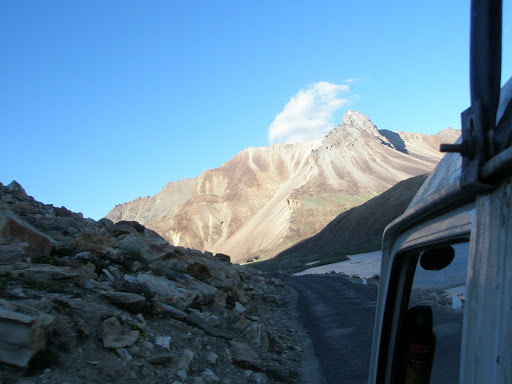
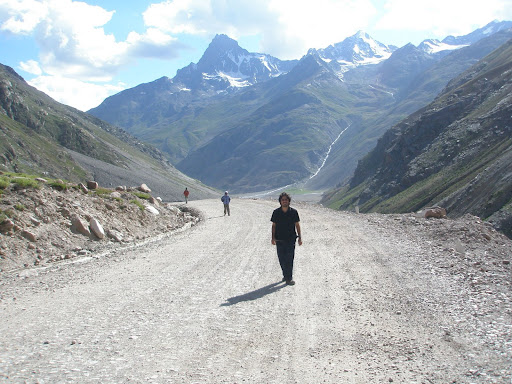
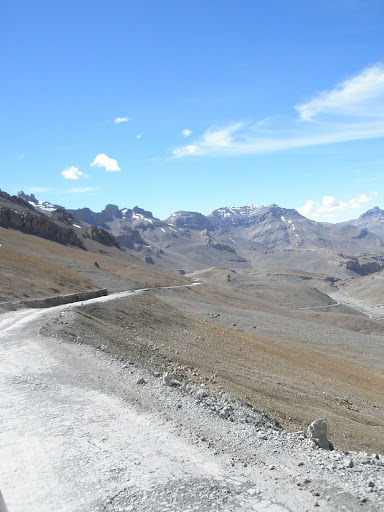
Gone is the verdant greenery and the clouds; Now it's dry, cold desert scrub and naked rock. It's a stark, barren landscape, but also beautiful, in a very different way; aspects of mountains that are otherwise hidden in vegetation emerge here.
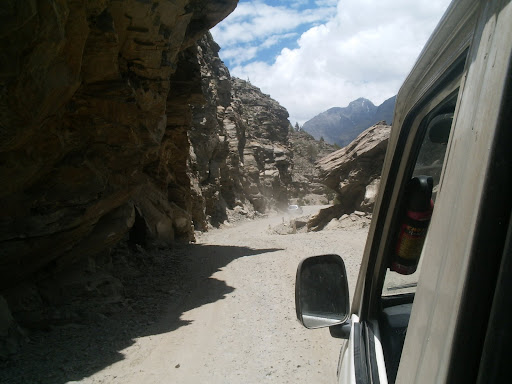
Now you can see the swirls and knife edges of different strata, blazing colors of an alien planet, hear the sound of the wind whistling past dry rock instead of just ruffling leaves; and everything is bathed in pure, clean sunlight, unfiltered by dirt, cloud, moisture, or even that much air. The colors are deeper, more intense; everything's more silent, and the world seems a lot bigger.
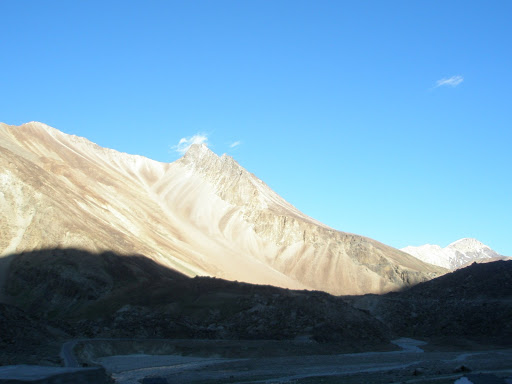
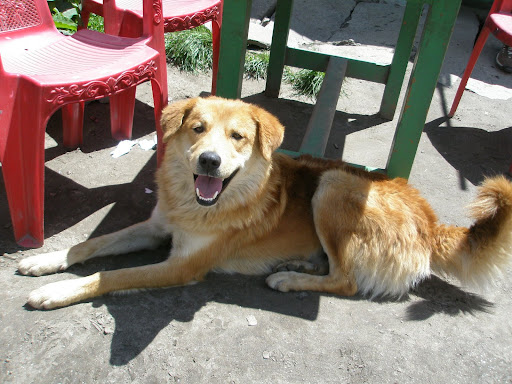
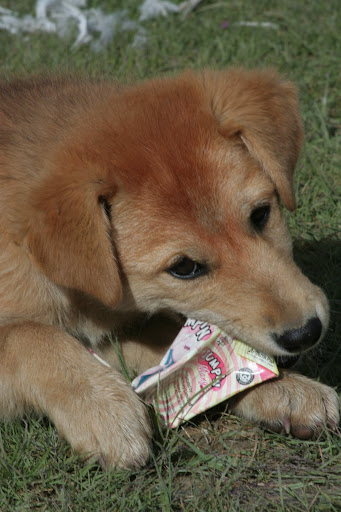
Khoksar is a small village where we stop for a tea break, and meet Laloo, the Pride of Khoksar. Laloo's a huge Golden Retriever - Himalayan mongrel mix, a giant of a dog with the softest, thickest, and silkiest red-gold coat I've ever seen. That, mixed with an expression of permanent, indulgent, idiotic benignity, makes him the hands-down winner the the Dog I'd Most Like To Have award. He hangs out with us for a while, gobbling biscuits gleefully, then snoozes in the sun for a while before seeing us off with some enthusiastic tail-wagging and copious slobber.
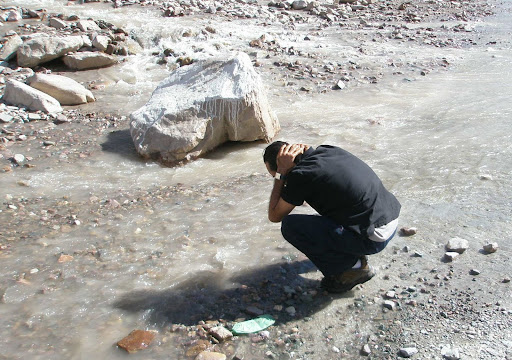
The temperature is... strange. Different. Stand in the shade, and you shiver; it's like standing in a chilled zone in a good five-star hotel with a really good AC. Streams are icy, almost unbearably cold; washing up is a quick, surgical op, just go - splash - hyperventilate - splash - lose feeling - dry off - rub sensation back.
 The sun, on the other hand... sunlight is intense. There's less atmospheric filtration, and thinner air - Ultraviolet radiation is much stronger. Sunshine is a blowlamp that goes straight to the bone. On naked skin, without sunscreen, you can feel the radiation slice in, skin crinkling, drying. In a few seconds, you start feeling uncomfortable; in less than a minute, it's almost painful. Chatka.
They say Ladakh is the only place in the world where you can get frostbite and sunburn at the same time, standing half-in, half-out of shade. Believe it.
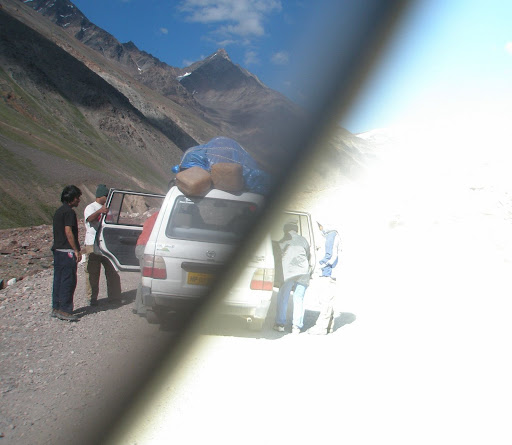
Somewhere between Jispa and Darcha, we get halted by a landslide. Two 'dozers are already at work from either end, shoving the rubble aside to let the line of halted trucks through. We watch for a while, seeing that they're going to miss each other in the middle; sure enough, that's what happens, and much cursing of each other happens between the drivers and from the overseer. They then make the best of it, connect the two nearly-aligned pathways, and traffic finally goes through.

The mountain bulldozers, like most other mountain stuff, are tough, hardy, and supersized. They're not pretty, but definitely aren't the kind of machinery you'd want to mess with; tough - to the point of unstoppable indestructibility - is the impression you get. The army stations a 'dozer every 5 km, to keep the roads operational; even when they're closed to civilian traffic in the off-season, they’re supposed to be usable.
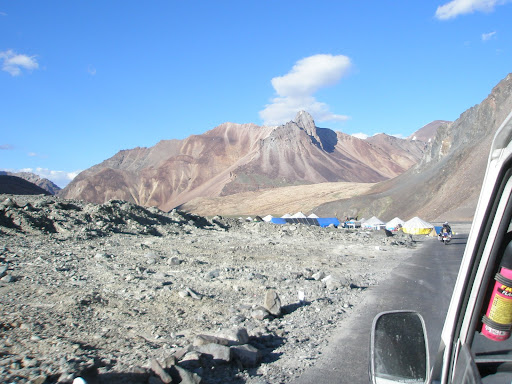
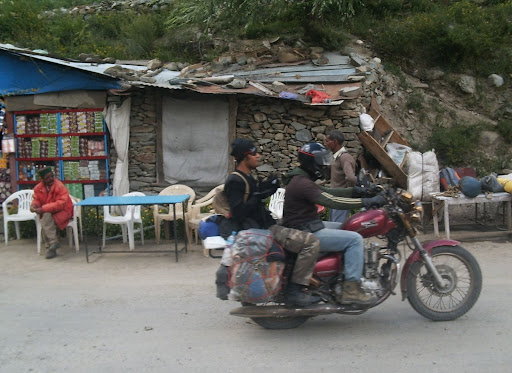
By afternoon, we cross Darcha and enter Bharatpur Biker City; a collection of parachute tents that are the most common habitation you’ll see on the road. Inside the circular tent will be a kitchen area with a kerosene stove, a shelf of essentials, and a ring of beds with thick blankets, and an inner ring of tables.
 This is your supermarket, restaurant, hotel, everything-you-ever-wanted stop. If they don’t have it, you don’t need it. I’m wolfing down a meat-chawal at the Geeta dhaba and can feel the chill coming on; the rajais piled up in a corner of the dimly lit tent start looking more essential than earlier thought. And it’s just late afternoon!
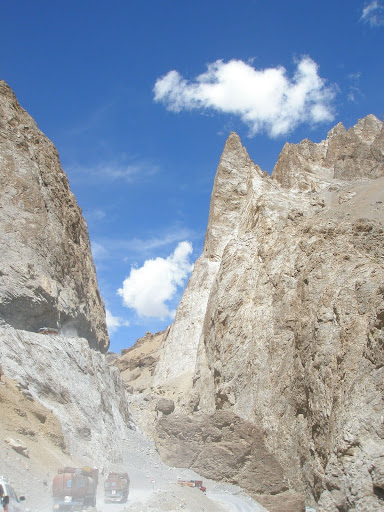
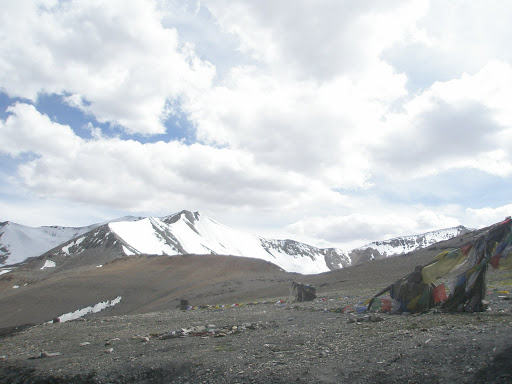
Back on the road, through vast moraine fields scoured out of the hills by glaciers over aeons, we look around at the emptiness – thousands of square km of rubble and stone, backdrop’ed with maggi-twisted strata in orange, black, grey, white, and ochre colors in the mountains that always occupy half the sky – and we get a sense of insignificance, yes, realizing what a small part of the world we are, how temporary; yet you also feel a sense of intense pride, that in spite of being so small, so insignificant, you’re still here. You made it here, and crossed this desolation.
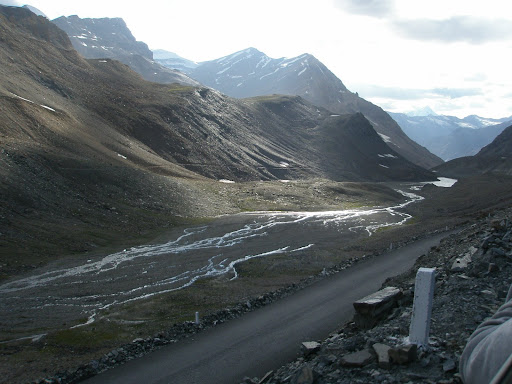
The rock looks alive. Veined, glowing, varied, dynamic; like a photograph of violent action, frozen in mid-step. It may not move, but you can see how it would, if you could stare in geological time. The Himalayas are young; still very active. Everest is 4 feet taller than it it used to be, when Edmund and Tenzing climbed it.
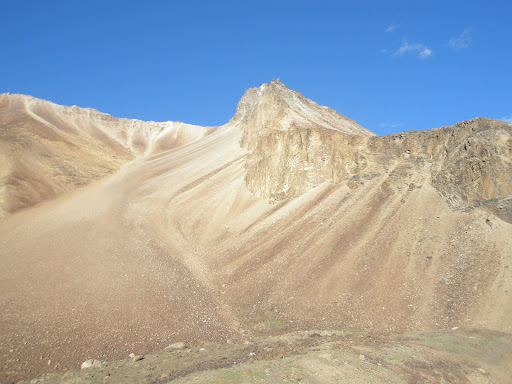
Ever wondered – is this why mountain religions counsel the search for inner peace, rather than working for a heavenly reward? Out here, the heavens are not even half their usual size; a poor second to the earth, which is all around and towering up, fantastical and awe-inspiring.
Baralacha la.
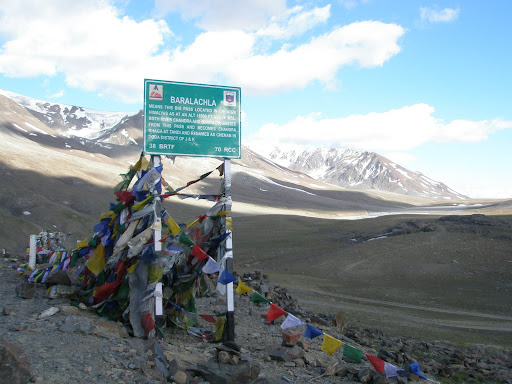
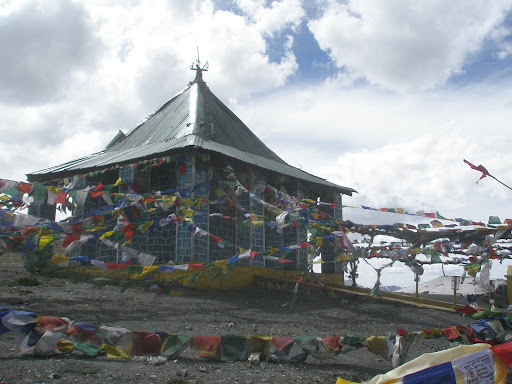
16,500 feet. It’s an eerie place – in the fading daylight, even the wind has dropped, and the ubiquitous prayer flags just wave gently instead of fluttering. All around are thousands and thousands of little stone cairns; large, small, crude, elaborate, upright shards and balanced rock piles, multi-colored…
It’s a disquieting sight, because these are all so obviously made. But you look around, and the landscape is empty. It brings home to you how lonely the place is; people come here, in twos, threes, or small groups, build a cairn, and leave. For so many to exist, they must have been doing this for thousands of years.
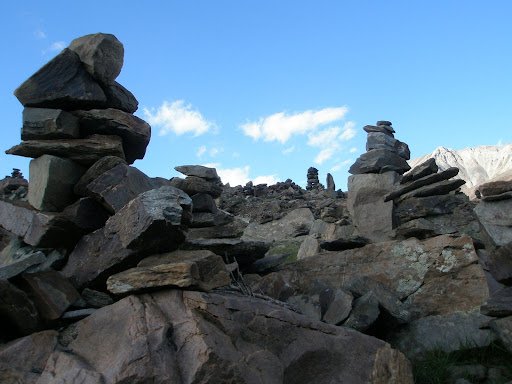
Some of these same rock piles would have been around for longer than I’ve been alive. Unmoving and silent, in an unmoving, silent world. While literally everything in my life happened. And they’ll probably be here long after I'm dead, too…
Sarchu
Sarchu Oasis Camps… is a tent township, a collection of campsites. Luxury tents, with beds, attached toilets, dining hall, all the comforts of home.
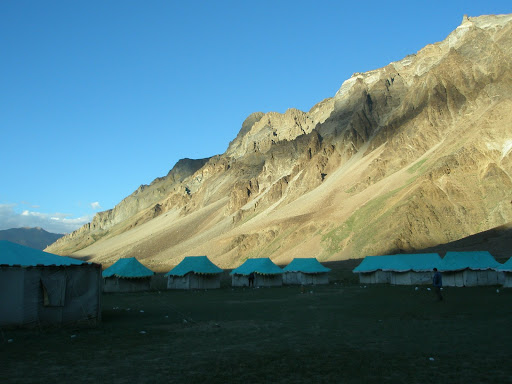
Sarchu region is a flat huge bowl-like valley, a vast empty space in between mountains, and a dead straight road through it. Only grass grows, and tiny purple flowers adding sudden, subtle color to the green-brown, a gentle floral river flowing through the grassland.
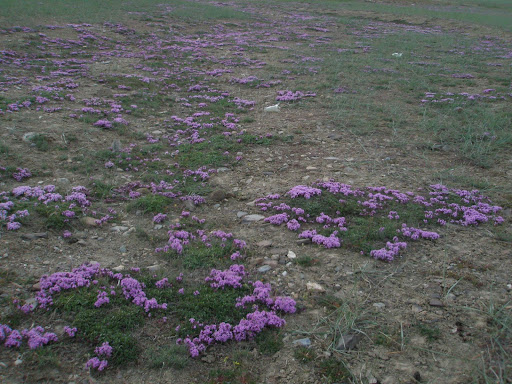
The minimum temperature, even in peak summer can drop below zero; that’s why so little vegetation can survive. Wind chill can freeze your nuts off, and in winter, it’s white death.
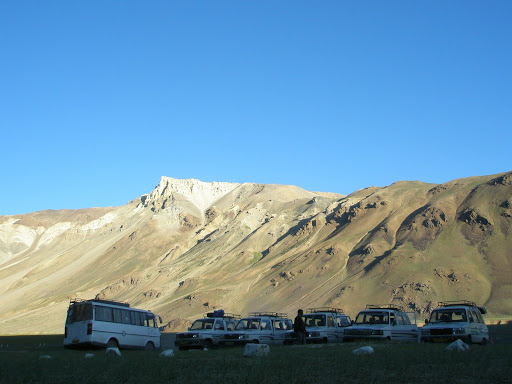
It’s late, and the last of the day’s sun glows on the peaks on one side; the valley’s a quiet, shady calmness with a brilliant blue sky fading to indigo, gold-white bas of cloud, and a visibly narrowing band of yellow-brown on the surrounding peaks. These pictures can't even come close to conveying the color of the sky; it's come faded, washed out. The real thing is deep, deep blue, crystalline, close enough to touch yet bigger than anything you've ever seen before...
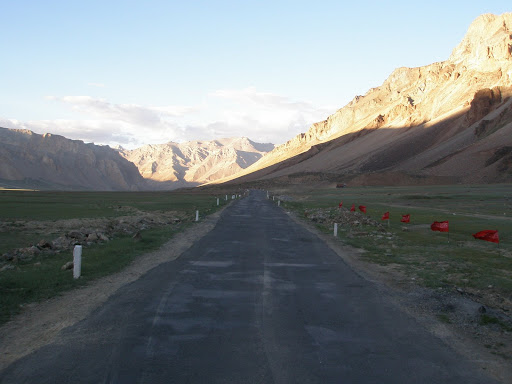
Night falls very quickly; and after a quick meal in the dining tent, warming our freezing fingers on bowls of hot soup and warm water, we head back to our tents. Camera batteries discharge quickly in the cold, but I figure out an innovative electrician-style shortcut involving a multiplug, some bits of wire and our tent’s electric bulb that lets me charge up. Buy me a drink and award me the Trek Ratna!
Idea for the next trip – carry the batteries in a thermos.
Also realize I've been constipated for 3 days; ask Rc for advice, but what he gives instead is a foul, thick, semi-solid revolting concentrated isabgol concoction. Somehow manage to drink it don and keep it down. Let's see what the morning brings.
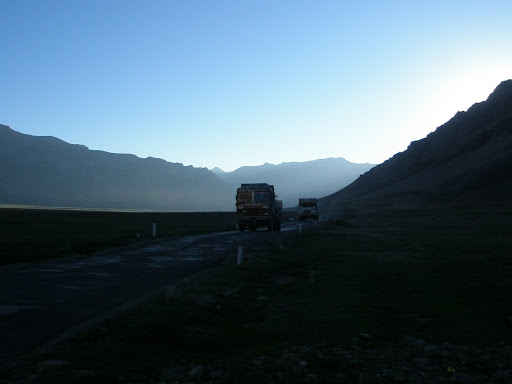
As we drop off to sleep, there's a period of intense introspection. R is looking a little wan, possibly with AMS, but he says it's something else. He can't believe it's only been 3 days since we left behind our regular lives and started living out of backpacks - and in that period, we've seen so much, had such fun... and with so much more still to come... it's a strange sensation. Life's axioms - things that we believed so important, so necessary - start getting questioned. Do you need a cellphone? Do you need a nine-to-nine job? Do you need the internet? A house, a car, all the status symbols? It feels like... you suddenly realize that Life is so much bigger than you thought, that you were just exploring a tiny part of it... and now your horizons have suddenly, shockingly expanded. It's an empty space all around, physical - and intellectual. Spiritual.
"Will we remember this when we go back?" he asked. "Or will this fade away in a few days in the daily grind, when we're back in office?"
It was as much a question to himself as to me, and I don't have an answer... but I kept thinking about it.
When you fall in love - with a person, a place, an experience - you take away the memories, but you leave behind a little piece of your soul. Maybe in the daily grind, we may forget this feeling - but we will continue to have that little ache, that tiny little emptiness deep within us that will remind us that once, long ago, far away, there was a place, a time, that we loved so much we left a part of ourselves back there. We will remember that there was a feeling we had, even if we don't remember exactly what it was. And I believe - that is enough.
Enough to bring you back. Enough to keep you going, searching for that soul-changing experience. That - that is the true spirit of adventure, the reason we travel, we explore.
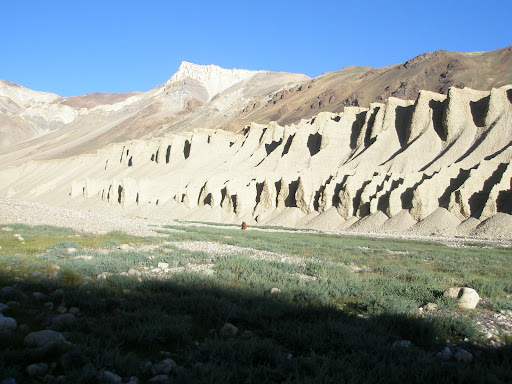
 Do a quick visit down to Sarchu gorge in the morning while the rest of the public is getting ready; the gorge is lined with fantastical rock pillars, carved by rain or snow into the river.
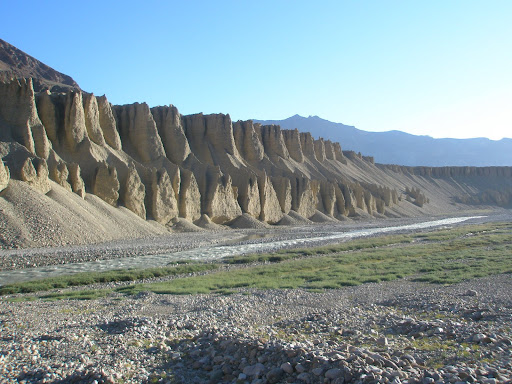 The level is around 50-100 feet below ground level, and we get there via a long, gentle slope of a dry stream-bed; but getting back up is killer.
 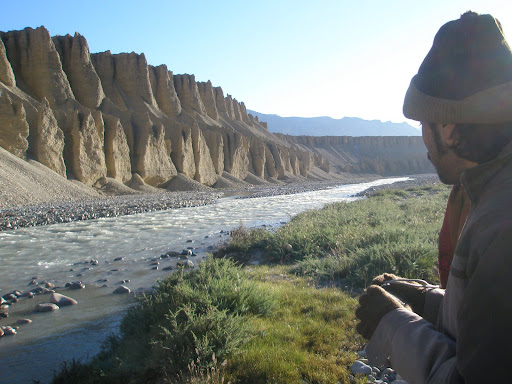 Even such a mild activity as walking on a slight incline for ten minutes has us gasping for breath, pausing to recover every few minutes with black spots dancing in front of our eyes, hearts hammering. Still a long way to go before I’m acclimatized to the altitude!
 So we get back into the vehicle, and start driving, past...
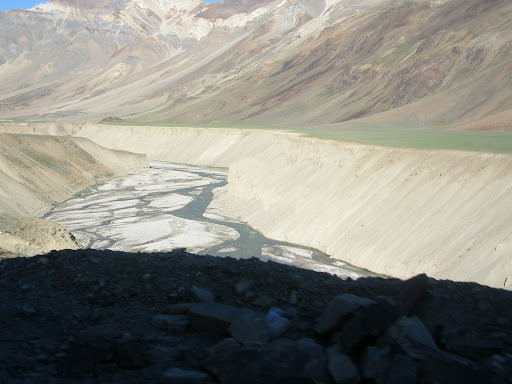 ...the Sarchu river...
 ...a 21-loop ascent...
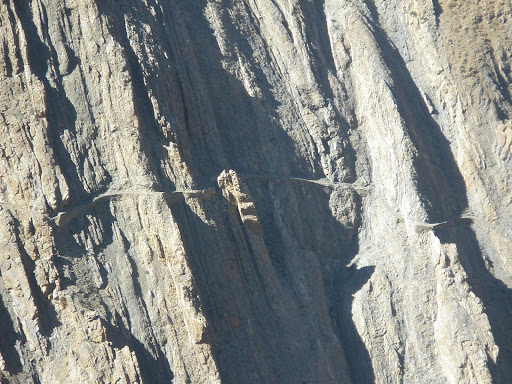 ...a climbing trail clinging dizzyingly to a precipice...
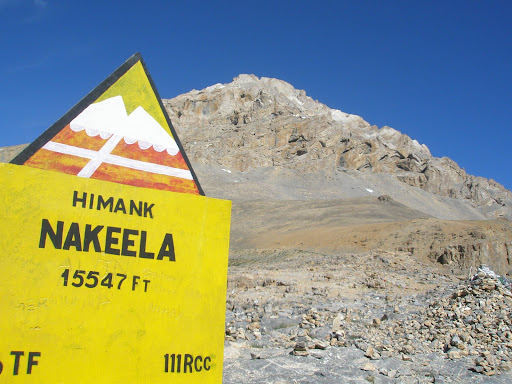 ...Nakeela pass...
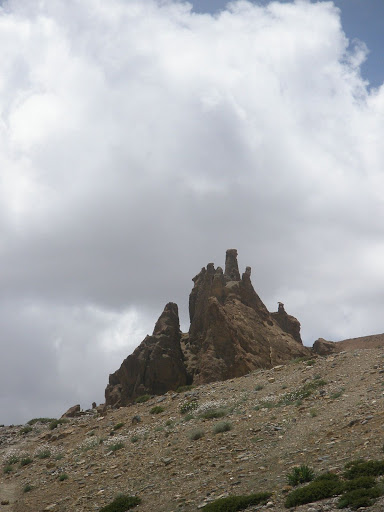
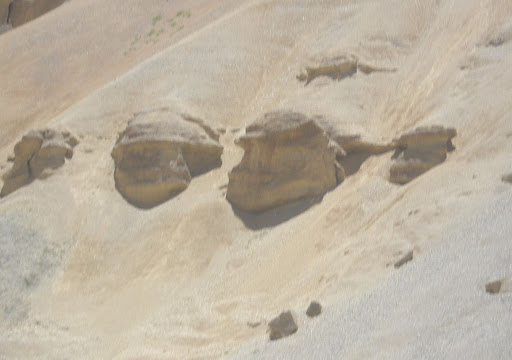
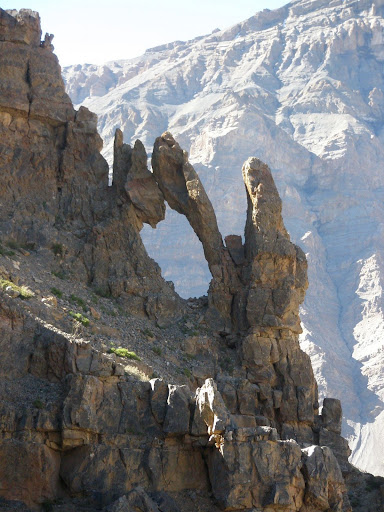 ...Wind-carved rock formations...
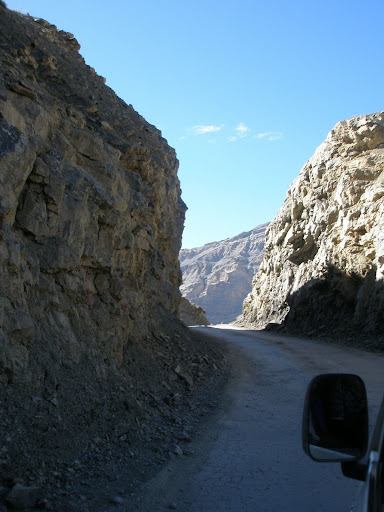 ...narrow passes...
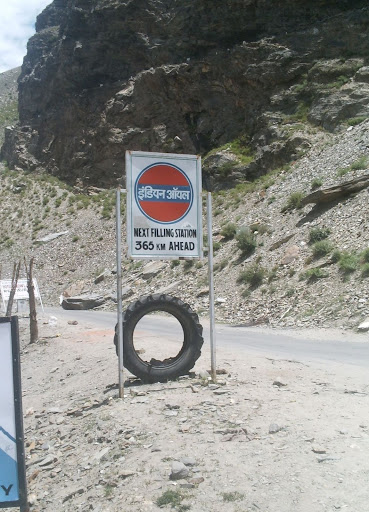
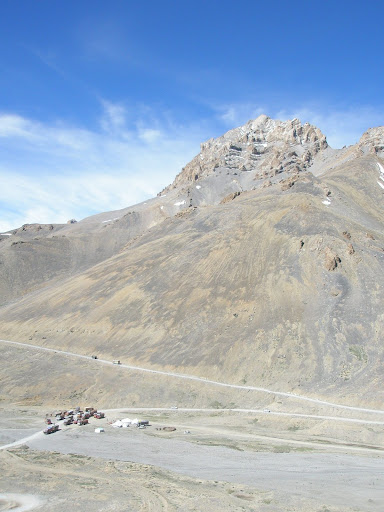 ...fuel dumps and supply centers...
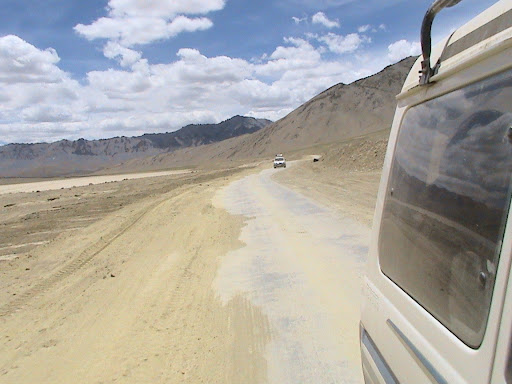
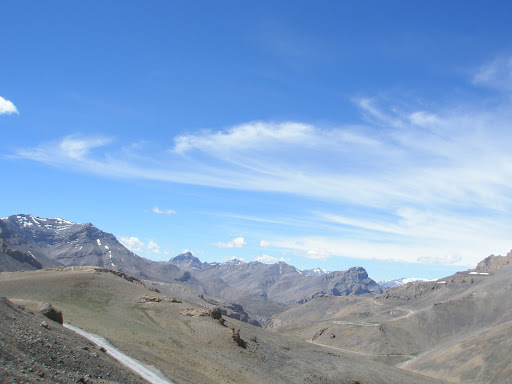 ...long, winding roads.....
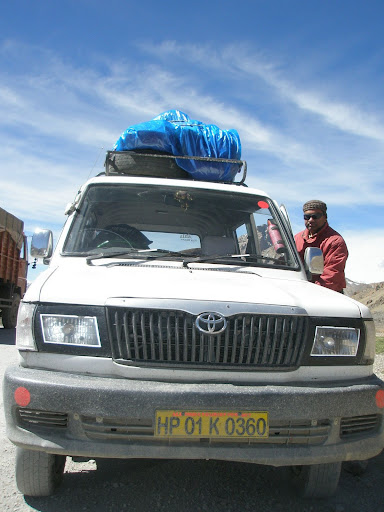 ...with some rest breaks...
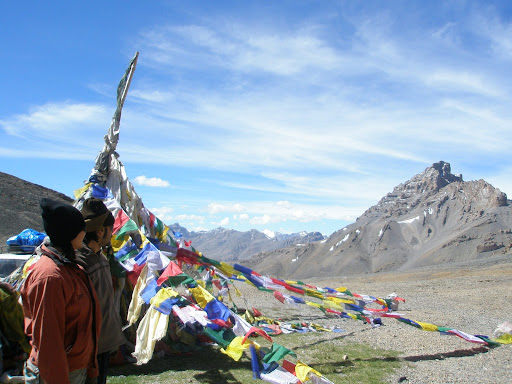 ...Lachlang Pass and prayer flags...
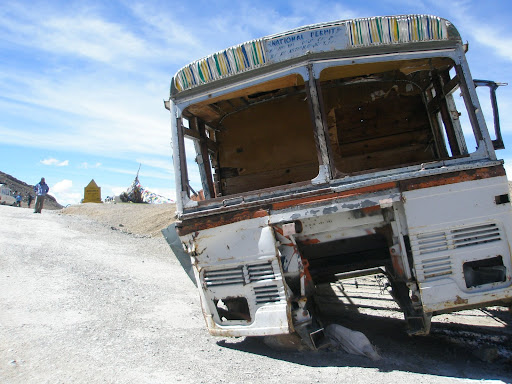 ...husks of trucks abandoned, until finally...
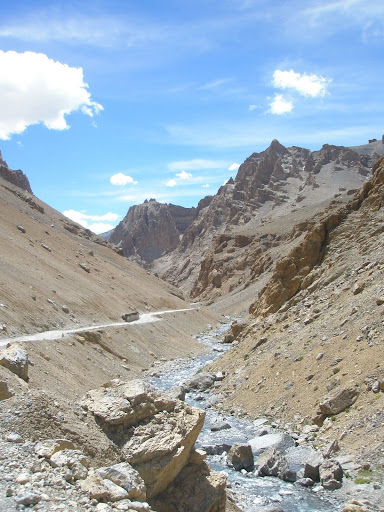 Pang is another extreme landscape, the symphony of rock and sunshine reaching it’s peak.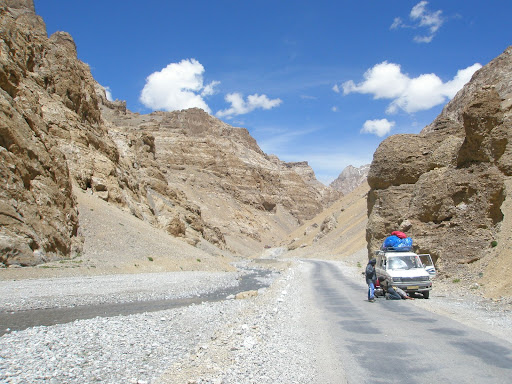
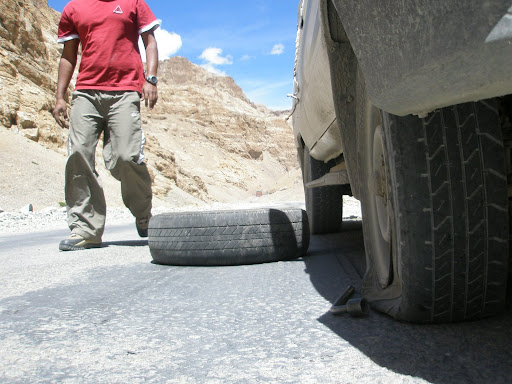 A forced stop because of a flat tyre, and a walk around the desert land. The oxygen levels here, because of the height, lack of water, and no vegetation, is the lowest yet; and the sun is blistering. It induces a weird, dream-like state in us; nothing seems real, everything – enhanced. The water’s green-blue, instead of the usual muddy brown. The sky color’s deeper, clearer. Clouds are closer. Rocks are starkly contrasting reds, whites, blacks and yellows. Shadows cold, sunshine hot.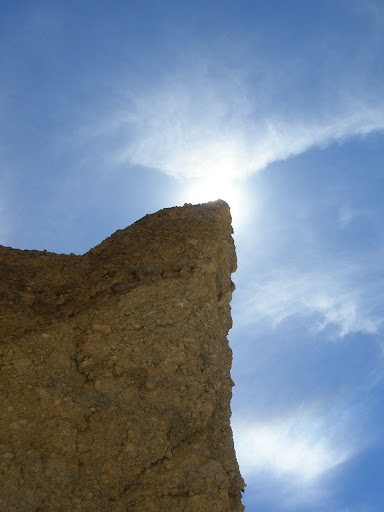
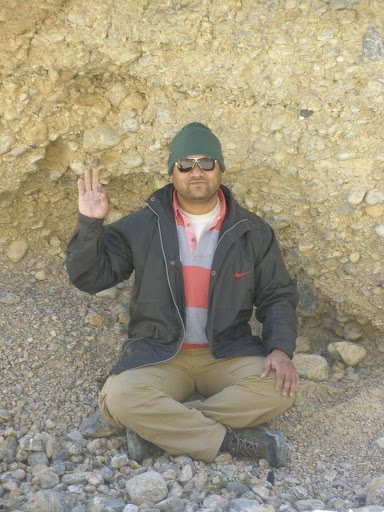 God help you now
 At Pang village, we stop at the Potaola for chai. Another standard parachute tent – with the softest, warmest beds I’ve sat on, and they’re just a blanket on rock! Y & R are feeling the effects of the altitude, with fever, nausea, and dizziness; Y falls fast asleep after tea and we debate leaving him there, but take pity on auntie’s panic-struck looks and pick him up after repairing the spare.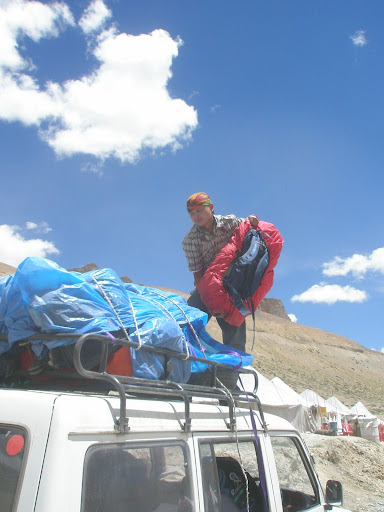
 There’s an interesting little drama happening by the roadside – a biker’s crashed his bike and is loading it onto a rice truck. He’s talking in broken English and maybe Israeli; the driver’s listening and responding in Haryanvi. They still manage to coordinate the loading of a 300-kilo Enfield, manhandling it on top of a six-foot-high stack of rice sacks, helped by our driver, the puncture repair guy, two locals, and the biker’s girlfriend, a major hottie in a tough, hard-as-nails kind of way.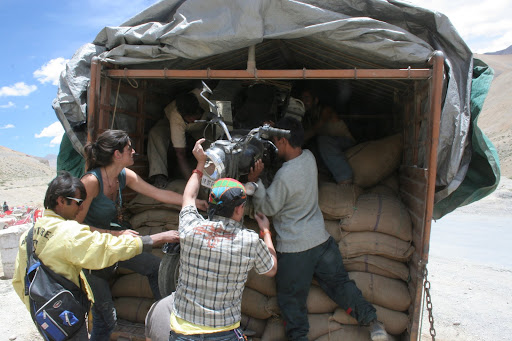
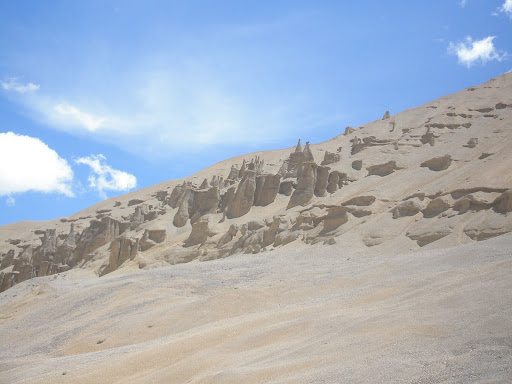
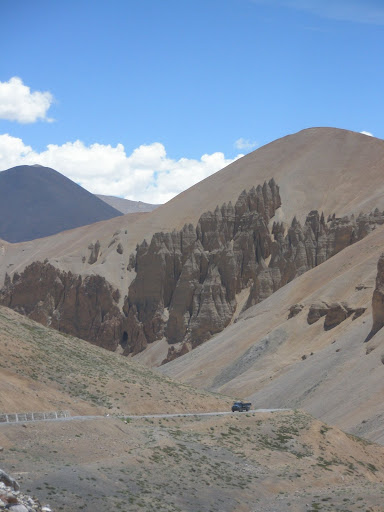
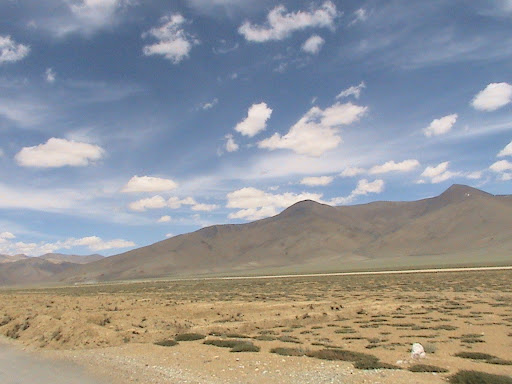
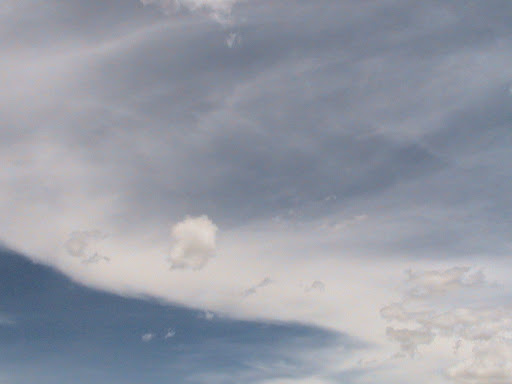 And distinctly separate cloud types, hanging solidly in the still sky.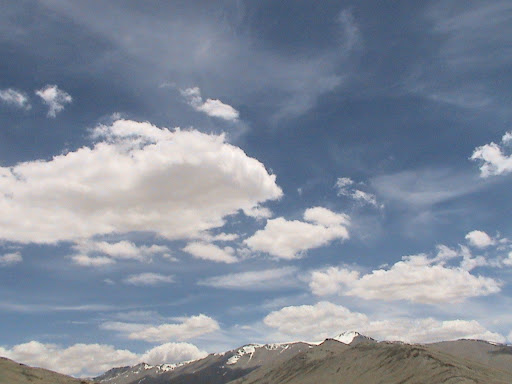
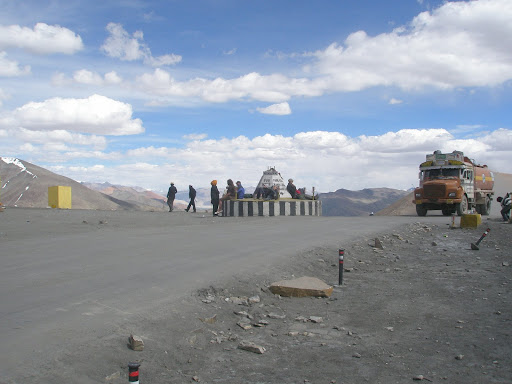
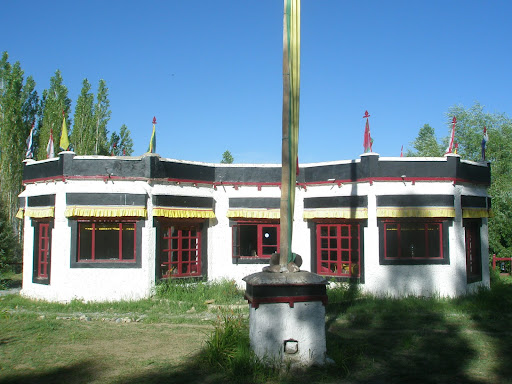
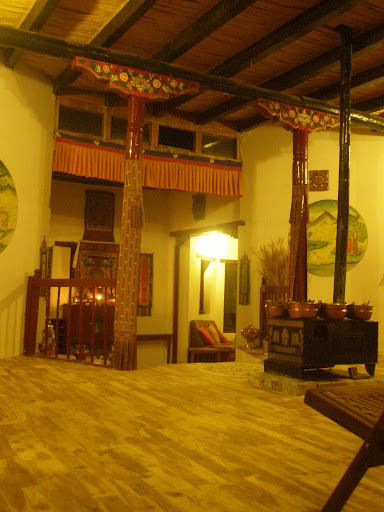
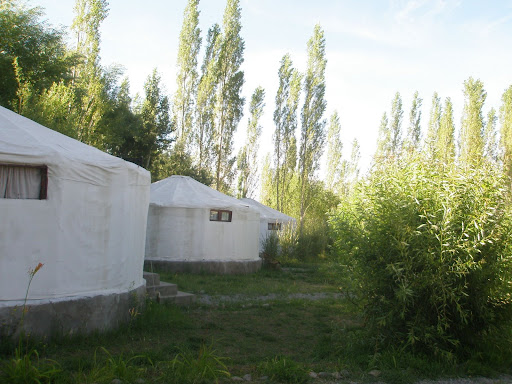
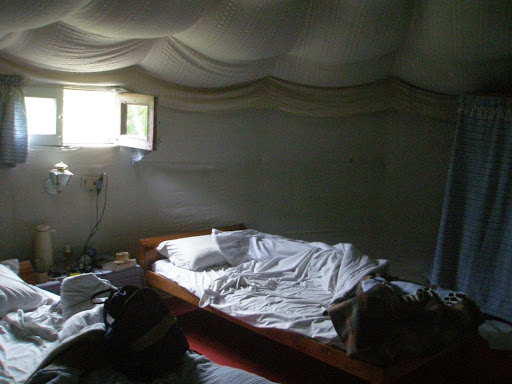
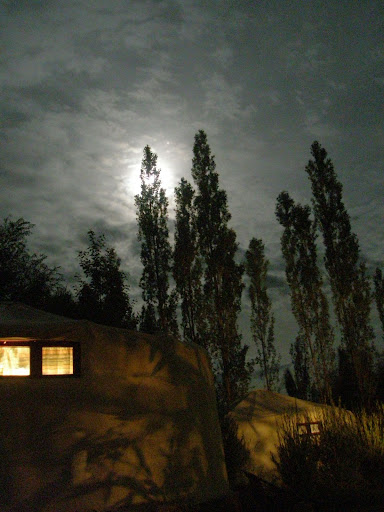 journey's end - and a well-deserved sleep


